




COLUMBUS, Ohio — An Ohio appellate court has ruled that the EdChoice voucher program, which uses taxpayer dollars to fund private school tuition, is unconstitutional.
The program will still be able to exist, as the judges expect the state to appeal.
BREAKING: An Ohio appellate court has ruled that the EdChoice voucher program, which uses taxpayer dollars to fund private school tuition, is unconstitutional. The program can continue, as judges expect the state to appeal. @WEWS @WCPO @OhioCapJournal https://t.co/gY8AWZKJ4r
— Morgan Trau (@MorganTrau) October 15, 2026
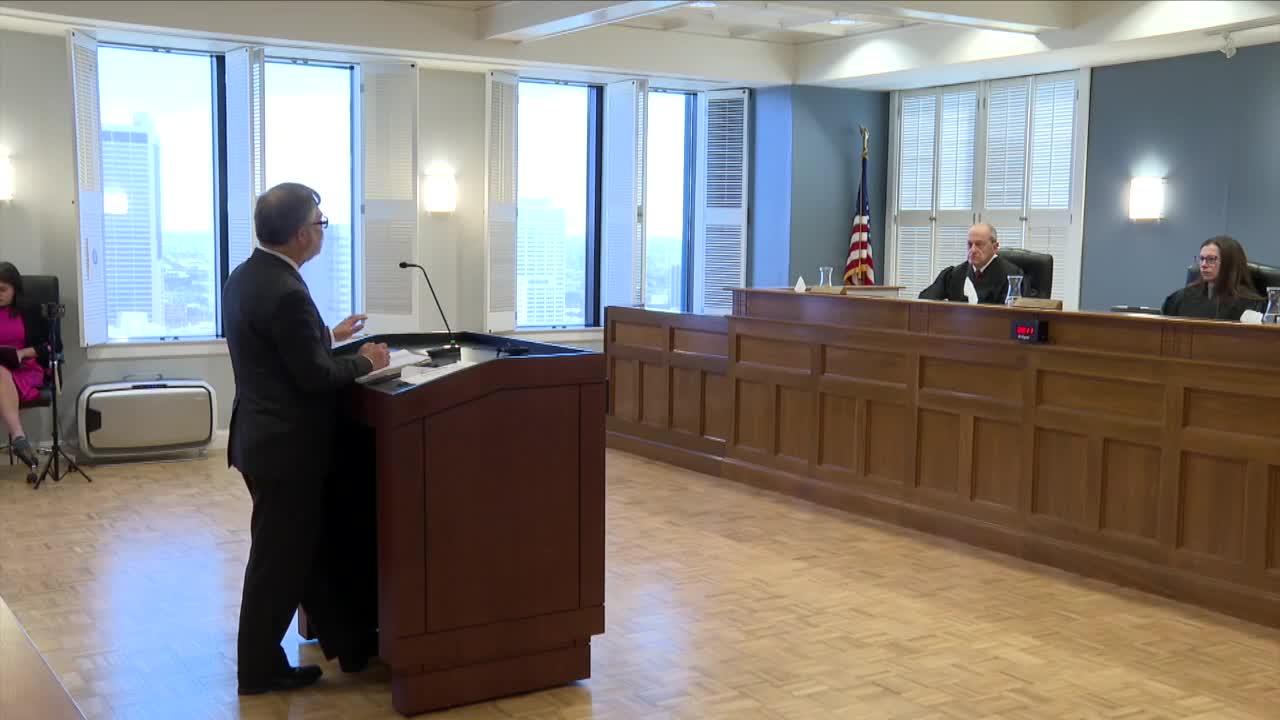
A panel of Democratic judges on the 10th District Court of Appeals in Franklin County unanimously sided with the more than 300 public school districts that sued, alleging that EdChoice was violating the Ohio Constitution by funding a separate school system, one with a lack of oversight that isn't available to rural students.
Watch previous coverage: Ohio judges question why taxpayers fund private school tuition
"EdChoice, as presently structured and funded, secures with taxpayer funds a competing system of uncommon schools that is not subject to the same obligations imposed on Ohio’s system of common schools," Judge Dave Leland wrote.
It is also illegal for "drawing taxpayer money away from public schools" and "cherry-picking students from public schools, causing financial hardship," the ruling states.
"We're getting really close to the end," Cleveland Heights-University Heights school board member Dan Heintz said Thursday.
The district was the first to join the lawsuit.
"We were so uniquely damaged by the voucher system, especially as it was originally funded, where the state actually removed funding from our account to cover the costs of these private school vouchers for students who lived in our district," Heintz said.
EdChoice supporters said the decision was disappointing, but not surprising.
"We always knew it was going to go to the Ohio Supreme Court," Keith Neely, an attorney for Institute for Justice, which represents a group of Ohio EdChoice families, said Thursday.
The state is appealing to the Republican-controlled high court, where GOP lawmakers are confident they will win.
"Empower families to make those decisions for their own children, and give their children opportunities," Neely said.
Governor's race
Education has been top of mind for both frontrunners for governor.
The judges said that while public schools are being underfunded, the state has spent $2.5 billion in the budget on private schools, which don’t have oversight.
At a campaign event, we asked Democratic candidate for governor Dr. Amy Acton about the decision, to which she said she hadn't read it yet. She did promote her plan to increase dollars to public schools.
"I believe we need to fully fund our bipartisan funding plan that we have had to finally be constitutional," Acton said.
We have been reaching out to GOP candidate Vivek Ramaswamy for a sit-down interview for more than a year, and while he hasn’t declined, his team will not give us a date. When we were able to catch him after an event in the spring, he cheered EdChoice.
"Somebody should not be trapped in a failing school district in the inner city of Cleveland if there's a better option," Ramaswamy said.
Libertarian Don Kissick and running mate James Mills are supportive of EdChoice, as well, but want more transparency.
"Ultimately, parental choice, competition, strong public schools, and accountability for taxpayer dollars shouldn’t be mutually exclusive," Mills said.
The program allows any family, regardless of income level, to get taxpayer dollars to attend nonpublic schools. Previously, we asked both Acton and Ramaswamy the same question: Should millionaires be able to get a private school voucher?
"Vouchers — over $2 billion and counting — instead of putting that money to fully funding our system of public schools, I think, is a crime," Acton said, adding that she needs to look into the financial qualification levels once she is governor.
Ramaswamy didn’t answer the question.
"I think that educational choice is important and I'm not going to be responsive to slapstick kind of questions," Ramaswamy told the team.
The Ohio Supreme Court is likely to take up the case in its next term or two.
Follow Statehouse and Columbus bureau reporter Morgan Trau on X, Instagram and Facebook. Email her at Morgan.Trau@wews.com.
